Since first arriving in the Basel area area back in 2000, I have lost count of the number of times I have gone on walks in and around the vineyards of Tüllinger Hügel – the hill that separates Weil am Rhein to the west from Lörrach to the east, and, at its spur, overlooks the picturesque open-air baths (recently redesigned by Basel architectual duo Herzog and de Meuron) in the Swiss canton of Basel-Stadt. Here, the border between Germany and Switzerland straddles the slope in a somewhat haphazard fashion, although in general the vineyard plots at the bottom of the incline belong to Switzerland. Unlike the south-westerly Weiler Schlipf, the land on the German side, Riehener Schlipf, named after the Swiss municipality of Riehen to which it belongs, has more of south-easterly exposu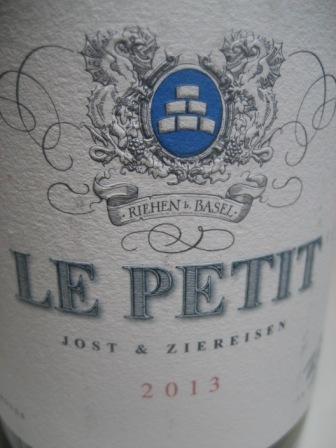 re. Like its German counterpart, this is limestone territory. In theory, the potential of the Swiss plots is just as great.
This is where German grower Hanspeter Ziereisen and young Swiss winemaker Thomas Jost enter the equation. Jost worked for some time at Ziereisen’s winery in Efringen-Kirchen. The two recently acquired the lease on the vineyards – which are in fact owned by the village of Riehen. If you want a more in-depth background report, “Bonvinvant” does a sterling job in his blog post “Spitzenwein vom Riehener Schlipf“. The article is in German, and I think it would be a tad unfair for me to paraphrase it all in English, given that he originally put in all the research for it to be published in the local paper, Basler Zeitung. Nevertheless, the basics are as follows.
Jost & Ziereisen currently produce two white wines: one a Sauvignon Blanc, the other a Pinot Blanc – both named “Le Petit (Blanc)”. A third white, a Chardonnay, is due to be released in 2017 and will be called “Le Grand (Blanc)”. As you can gather from its title, this latter wine will be a cut above the other two. The reds – both Pinot Noir – are structured along the same lines, i.e. “Le Petit (Rouge)” and “Le Grand (Rouge)”. This keeps things nice and simple. It is also very much a nod to the pair’s mutual love of all things Burgundy. In fact, I daresay both would argue that this locality – with its limestone soils both on the Tüllinger hill and in Ziereisen’s vineyards a few miles further north, and with the warm air that tends to funnel up here from France – is just as suited to growing Pinot Noir as, say, the Côte de Nuits.
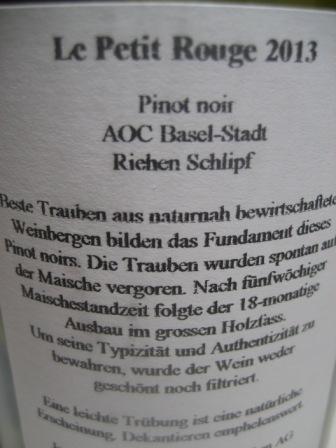 I tried their “lesser” Pinot Noir over the weekend.
Jost & Ziereisen, Le Petit Rouge 2013, Pinot Noir, AOC Basel-Stadt, Riehen Schlipf
I’m rather tickled that Basel-Stadt has its own AOC (appellation d’origine contrôlée), given that the vines in Riehen are, as far as I know, the only vines grown commercially in the whole of this city canton*.
Invitingly ruby in appearance. There is a certain translucence, but, on closer inspection, the density of colour is fairly middling for a Pinot. Lovely ethereal stemmy notes greet me on the nose, along with hints of cherry. Purity and finesse are the by-words here. The aromas are elegant. Nothing is loud. Stemmy again on the palate – this is a good characteristic, lending the wine an extra dimension. The tannins bite ever so slightly, but this is also good as it provides a counterpoint to the elegance and purity of the fruit (red and dark cherry). Supple but no more than medium in body. The finish is refreshing, savoury and satisfying. Maybe this is autosuggestion, but I can detect a certain similarity to the Pinots that the Schneiders produce just a few stone throws away in Weil. Both share the same understated finesse.
* Having said this, there is also a small patch of vineyard situated to the left of the Flughafenstrasse (the customs-free transit road leading to Basel Airport) just before you reach the “Friedrich-Miescher-Strasse” bus stop in the direction of the airport. To anyone living in Basel – keep your eyes peeled next time you take the bus past there. I have no idea who picks the grapes. Maybe someone reading could shed light on this.

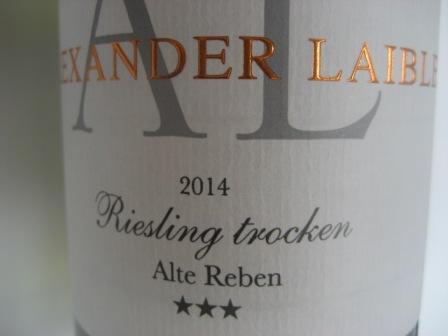 le broke off from father Andrea Laible’s renowned winery in Durbach and went it alone a good few years ago. He made a name for himself from the outset. I’ve tasted too few of his wines in the ensuing years to make an objective judgement. Here’s a new start.
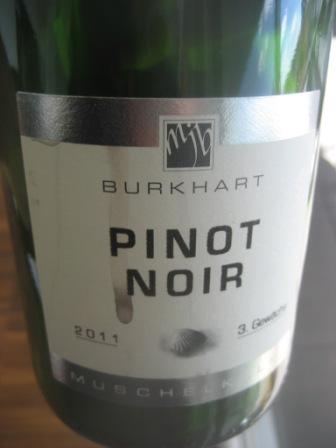 hart is very much what you could call a “boutique winemaker”. Not that he works in a boutique – that would be silly – but the quantities he produces are so small that they would be similar to the output of your average boutique; just substitute perfume bottles for wine bottles (ok, that’s an exaggeration). His vineyards are in and around Malterdingen – one of the world’s Pinot Noir sweetspots, and also home to the winery of the legendary, late Bernhard Huber.
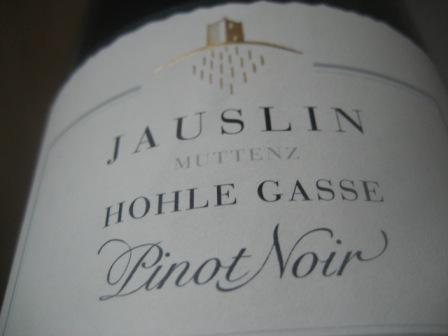 Urs and Regula Jauslin are local growers from Muttenz whom I’ve heard about in recent years on account of their wines garnering awards in Swiss-organised competitions such as the Grand Prix de Vin Suisse and the Mondial du Pinot. I take accolades such as these with a pinch of salt because, basically, they are only as good as the line-up of competing wines – which usually looks a bit lopsided depending on which country, which publishing house or whoever is holding the tastings. Nevertheless, both of the above competitions are fairly prestigious in their respective context. This, the Jauslins’ latest Pinot Noir Hohle Gasse, picked up a gold award at last year’s Mondial du Pinot. Was it any good?
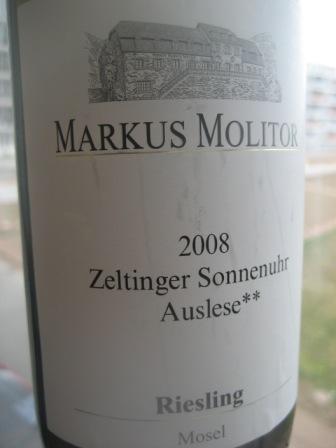 As I learned while tasting a lot of the wines that were the subject of
 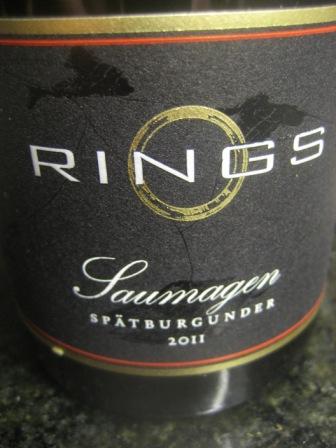 This was a present from my wife to mark a significant birthday late last year, although I was allowed to buy the actual bottle myself at a wine shop in Freiburg, Germany. Whenever I enter the store, situated on the edge of the old town, I’m like a child in a sweet shop. So many lovely bottles to look at. But this time my mind was already made up.
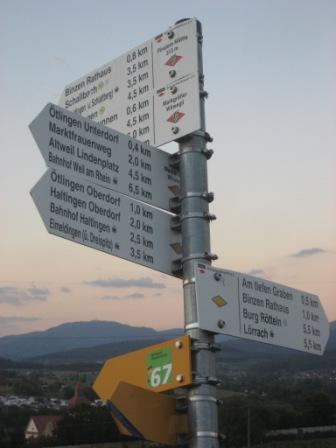 ink I should explain why
  winetext